10
Revenge of the Gator
1989 - HAL Labs
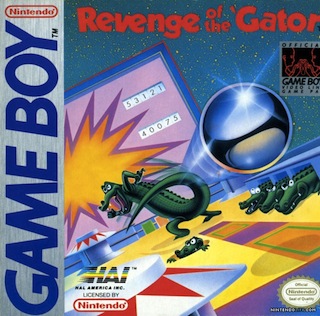
Kicking off this top 10 with a pinball game seems ludicrous. But when you consider both the Game Boy's purpose of being a portable gaming system and its actual size, you realize how hard it can be to transcribe into a handheld device a piece of hardware you can actually physically relate to.
But where the Game Boy lacks in realism (both in terms of visuals and physics) it makes up in gameplay, by introducing smooth animations and funky interactions that an actual pinball wouldn't be able to reproduce.
This game encompasses the Game Boy's ability to tell the player: "Those games you play in real life? Yeah, we got that covered too".
9
Batman
1990 - SunSoft
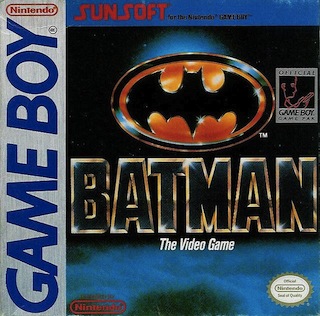
Movie franchises have quickly capitalized on the popularity of video games, for bad or for worse. Although already available on the NES, being able to play with your hero anywhere is a non-negligeable feature.
Batman was a well executed game, with rich levels, accurate controls, and an interesting arsenal of weapons. But what made this adaptation stand out, is its ability to correctly convey the movie's atmosphere, through its decors, music, and characters.
8
R-Type
1991 - Bits Studios
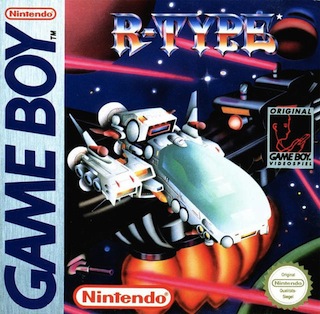
Considering how arcade games often have only a few basic controls, the Game Boy's limited interface seems sufficient enough to convey the arcade experience. But how do you port the shoot 'em up genre's colorful and busy graphics onto a 4 shades of gray display? You keep its biggest asset: fluidity.
Even with constant waves of enemies filling every dot of the screen, R-Type kept at all times its smoothness and accuracy, while you navigated towards the incesstantly shrinking area that your spaceship was allowed to have.
7
Micro Machines
1995 - Mindscape Inc.
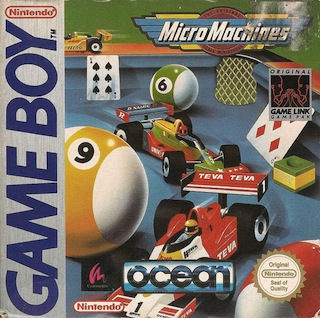
Lacking 3D graphics and the famous Mode 7 of its big brother the Super NES, the Game Boy didn't seem suited for any proper racing game, although F1-Race and the isometric Super R.C. Pro-Am were more than decent.
I remember being deceived by Micro Machine's box, which depicted cards and a pool table, and being surprised to find out it actually was a racing game. But unlike other ones, it offered 8 different vehicles, each of them providing its own unique behavior and environment.
Despite its rudimentary controls, Micro Machines was still about driving. It offered a genuine challenge where you had to master the fun but realistic enough physics to make your way through the rich and varied environments.
6
Super Mario Land
1989 - Nintendo
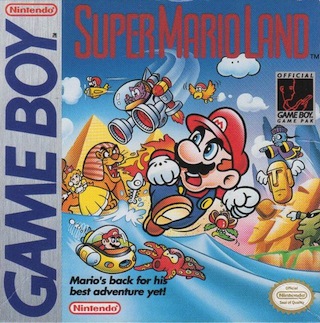
Nintendo could not launch a new console (especially a new kind of console) without its flagship character. But how could the Game Boy hold a Mario game less than a year after the incredible third iteration of its NES counterpart (Super Mario Bros. 3)?
In terms of gameplay and style, Super Mario Land was weird. Primitive graphics, spare level design, bizarre story, one-way scrolling...
However, it still was an incredible platforming game with precise controls, memorable music, and the whole usual armada of monsters and power-ups. The ability to experience the Mario series within the palm of your hands made up for this seemingly outdated port.
5
Top Ranking Tennis
1993 - Pax Softonica
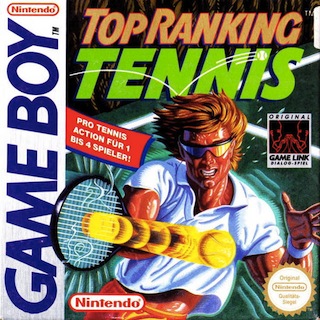
How could a tennis game (and not even Nintendo's own proposition) make its way to my Game Boy top 5?
Tennis games usually require many buttons to account for the versatility of the sport. Pax Softonica made up for the seemingly limited Game Boy interface by using both the Start and Select buttons as 2 additional ways to hit the ball (slice and lob respectively). If you wanted to pause, you had to tap "up" twice before serving.
This unusual deviation actually made sense because it allowed the game to master the most important aspect of a tennis simulation: control.
Several parameters came into play to define both location and power of a shot:
- the type (top spin, flat, slice or lob)
- the timing
- the player's position on the court
- and the direction (up/down, left/right)
These 4 simple parameters allowed to hit a wide range of shots that I haven't encountered in any tennis game ever since. It was hence easy to realistically trigger a fault (by hitting the net or sending your ball out of bounds), and challenging to win a point by outsmarting your opponent.
I have played my share of tennis games on many platforms throughout the years (Virtua Tennis, Top Spin, Jimmy Connors, Mario Tennis..), but none of them came close to the authentic experience this game provided.
4
Kirby's Dream Land
1992 - HAL Labs
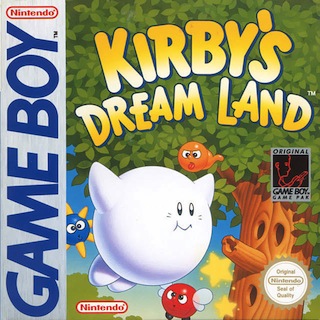
Many only know Kirby through Smash Bros.' plethora of characters, probably because its popularity is nowadays solely confined in Japan. But the whole series were kicked off almost silently through a 5-level game in 1992.
Choosing a handheld device to kick off a new character is an odd choice, considering the SNES was already available at that time and that the platforming genre was already well established on the Game Boy (Mario, Wario, Donkey Kong, Mega Man, the Disney adaptations...).
Despite its short length and elementary gameplay, Kirby's Dream Land was gorgeous and endearing. With precise mechanics and appealing graphics reminiscent of Super Mario World, the game's fresh and flawless execution ultimately managed to permanently integrate Kirby into the Nintendo legacy.
3
Tetris
1989 - Bullet Proof Software
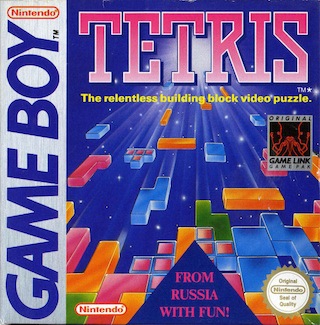
Although Tetris had already been around for 5 years when this Game Boy port appeared in 1989, it was this handheld version that actually established the franchise's popularity.
To encompass the legacy of this version, you have to realize how it's not only a game but a whole new genre. In hindsight, choosing Tetris as the Game Boy bundle counterpart seems evident. Simple graphics, basic controls, and a puzzle-oriented gameplay that allowed players to casually pick up the game for a few minutes while still providing a permanent challenge.
It's hard to tell which of Tetris or the Game Boy ultimately helped popularize the other. It was most certainly their combination that triggered an unbeatable chemistry that cemented both the series and the device in the history of video games.
2
Super Mario Land 2: 6 Golden Coins
1992 - Nintendo
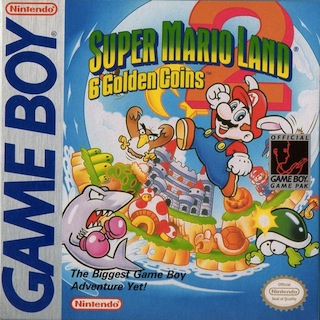
In 1989, we settled for a decent but rather limited Super Mario Land. We didn't care: we could try to beat Tatanga and save Daisy while driving back from school, probably thinking "I'll just play Super Mario Bros. 3 when I get home".
It's hard to pinpoint a single reason why this second opus significantly outperforms its predecessor, specifically because the improvements were not limited to only one aspect of the gameplay. Super Mario Land 2 provided a whole new experience hard to believe a Game Boy could pull off.
Graphically splendid and smoothly animated, the game borrowed a few features from its big brother SMB3: freedom of movement, level replayability, offline saving, and the innovative overworld map. The player could choose his own path through the 6 unique worlds, helping Mario make his way through the intricate level design that provided hidden puzzles and secret exits.
Considering all the enhancements that managed to make their way onto a portable device, Super Mario Land 2 is the game that made the Game Boy become a self-sufficient console.
1
The Legend of Zelda: Link's Awakening
1993 - Nintendo
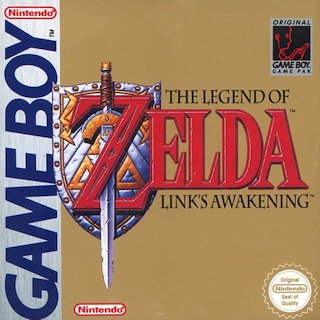
Ever since its launch, the Game Boy provided a joyful experience well suited for kids and casual gamers. But although its portability somehow compensated its technical limitations, the resulting experience would always remain temporary, good enough to amuse you between two Super NES sessions.
What the Game Boy needed was a new approach, an edifying experience that would transcend the realm of entertainment, where players would tell themselves: "Ok. Play time's over".
Link's Awakening embodied that shift. It wasn't a video game. It was a quest for enlightenment. There were no shortcuts, no boundaries, no certainties. Only an unwavering desire to carry on, through adversity and doubt, towards an elusive end, where your greatest challenge wasn't to prevail against the opposition but to overcome the intricacies of your own mind.
10
Star Wars: Rogue Squadron
1998 - Factor 5
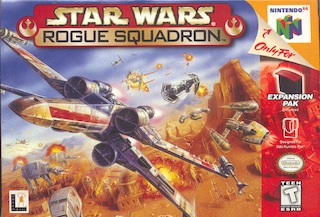
The European Nintendo 64 launch line-up already included a Star Wars game: Shadows of the Empire, an odd and mediocre collection of unequal gameplays which solely capitalized on the franchise name and the console novelty. It left the fans longing for a better experience, which came around 2 years later.
Star Wars: Rogue Squadron is an exclusively flight combat game. (This specificity was probably inspired by its predecessor's best asset, the Battle of Hoth level). It was the first game to offer a 640x480 resolution through the N64's expansion pack.
But aside from its technical performance and solid gameplay, Rogue Squadron provided what most fans were looking for: live the Star Wars universe by proxy.
9
Diddy Kong Racing
1997 - Rare Ltd.
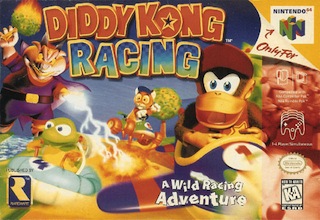
A kart game? Released in 1997 on the N64? Based upon Nintendo characters? But not developed by Nintendo?
Upon its release, it was easy to imagine Diddy Kong Racing being doomed to live in the shadow of its Mario counterpart.
But seeing it as (and criticizing it for being) a mere Mario Kart 64 copycat is missing the point. One would think its sole difference is the ability to choose between 3 vehicles (kart, plane, and hoverboard). But the game's distinctness lies deeper within: it is at its heart, and as its name suggest, a racing game.
Where MK64 is about multiplayer battles and power-ups, DKR is about single player adventures and driving skills. Don't let the friendly graphics and joyful naiveté fool you: this game is a player's challenge, where reaching 100% completion is not only the main and only goal, but a formidable quest.
8
International Superstar Soccer 2000
2000 - Konami
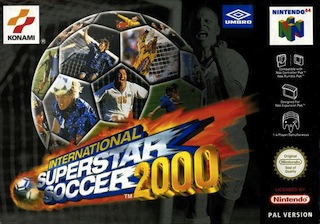
As with any console (especially during a World Cup year), the Nintendo 64 was flooded with a plethora of football games. While Fifa 64 was a joke, ISS 64 a good start, and World Cup 98 a decent alternative, ISS 98 (although flagged as arcade) was for a long time the sole contender for being the best of the platform.
It was until its successor was released 2 years later. ISS 2000 is the epitomy of the ISS series, developed by Konami's Osaka branch.
While KCET's Pro Evolution was already gaining traction on the PSX, KCEO refined to the extreme the franchise it created in 1995, by perfecting all the aspects that made it popular: precise controls, in-depth tactics, and an everlasting cheerful atmosphere.
7
Wave Race 64
1996 - Nintendo
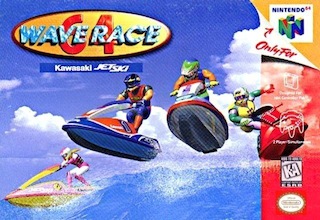
The N64 (and all Nintendo consoles for that matter) are not renowned or even sought after for their technical capabilities but for the casual friendliness they provide.
Wave Race 64 was probably meant to bend this preconception. It was first and foremost a technical accomplishment, a perpetual ballet of waves and colors. But this new-found realism and accuracy still defined a suitable challenge for gamers in search of unexplored areas.
Where most similar games on other platforms would overemphasize the fireworks, Wave Race stayed true to the physics it displayed and offered a short-lived but genuine experience.
6
Mario Kart 64
1997 - Nintendo
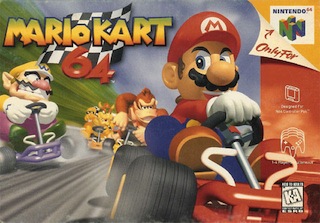
The N64 natively provided 4-player support, a not so surprising feature considering Nintendo's fondness for multiplayer parties. If you consider the company's easy access to a plethora of memorable characters, you get the sequel to the most popular spin-off of the Mario series.
Mario Kart 64 is the kind of game that can solely rely on its legacy to perform well commercially. But considering Nintendo's dedication to flawless execution, this version perfectly managed the transition from Mode 7 to actual 3D, while keeping the expected cheerfulness intact.
If it wasn't for its poor single player mode and the introduction of the damn blue shell, MK64 could have made its way into my top 5. The game nevertheless cemented the concept Nintendo still stands for: casual gaming among friends.
5
Lylat Wars
1997 - Nintendo
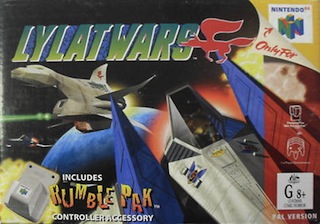
Star Fox was one of the selected few SNES games that were granted 3D graphics. So a N64 sequel was certainly expected.
Considering the visuals could only be slightly updated, Lylat Wars had to rely upon gameplay enhancements to be considered a worthy sequel. It introduced a new flight mode, All-Range (alongside the usual Corridor one), two additional vehicles (to complete the earth/air/water triad) and support for the Rumble Pak.
While the design of the 15 levels was obviously upgraded, the ability to pick your own path greatly increased the replay value. That, and the lethal Expert mode.
4
1080° Snowboarding
1998 - Nintendo
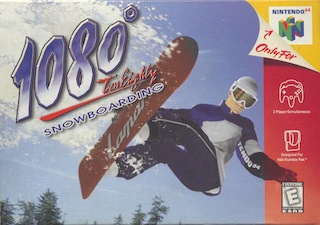
In 1998, kids had already been having a ball with Cool Boarders for over a year, rejoicing in the pleasures of virtual pixelated snowboarding. Stealing the PlayStation's thunder wasn't an easy task.
1080° instantly felt like a solid contender: stylish characters, trendy music, and a delightful interface. But where other simulations would rise the eccentricity to sinful levels, Nintendo's attempt stayed classy, realistic, and most of all, slow-paced. A further proof that simple doesn't mean easy.
This risky but meaningful restraint allowed every player to hit the slopes of immaculate snow to experience snowboarding in its purest form.
3
The Legend of Zelda - Ocarina of Time
1998 - Nintendo
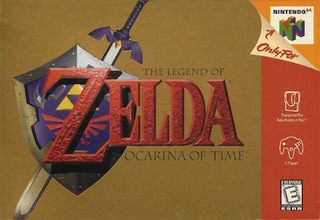
Who am I kidding? Why isn't this my top 1? When Ocarina of Time was released in 1998, fans had waited 7 years for a sequel to the widely acclaimed A Link to the Past. The exceptions were set very high, especially considering this version was the first to be set in 3D.
The Legend of Zelda series have always been the flagship of gameplay innovation, pushing the boundaries of video game entertainment, and using the medium as an excuse for a bigger purpose. What the N64 version introduced was a vast open world environment, a resonant intricate story, and a rich intuitive interface.
Through its technical achievements and impeccable execution, Ocarina of Time brought us an unprecedented experience, specifically because bewilderment could solely be achieved by discarding established concepts and designing new ones. And only immovable dedication while facing the unknown could deliver an everlasting journey through space, misfortune, and time.
2
GoldenEye 007
1997 - Rare Ltd.
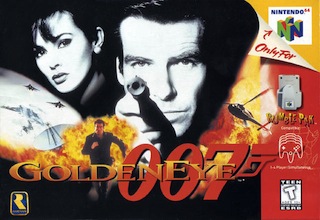
Any blockbuster adaptation is automatically meant for success, no matter the execution, especially when it can rely upon a renowned franchise that already provided gadgets, characters, environments, and even a storyline. But disrupting the FPS genre required something special.
The story of GoldenEye's development is one of a small inexperienced team of developers who, for the great majority, had never worked on a video game, and solely relied upon intrinsic talent and external models to copy from. This rather sloppy and unacademic approach was ultimately directly related to the game's success.
GoldenEye was initially defined as a compound of Virtua Cop, Mario 64 and Doom. Being inspired by an on-rails shooter provided the game with a simple but smart AI, that forced players to actually think before shooting. Objective-based missions drove the level design towards more openness that allowed liberty of movement and freedom of choice. And one-dimensional navigation required intuitive controls that console gamers weren't familiar with.
While this blend of seemingly unrelated guiding lights seemed ludicrous, it set up independent areas of work that could be perfected separately before being combined to form, through revolutionary elements of stealth and strategy, an unprecedented FPS experience.
GoldenEye is the embodiment of creativity through a lack of preconceptions, where set paths are fueled by infinite possibilities, and innocence an essential condition to brillance.
1
Super Mario 64
1996 - Nintendo
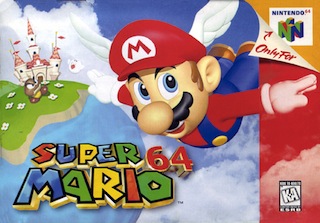
The mid-90s were the battleground of a long-awaited technical transition. Polygons, frames per second, and resolution were the industry's KPIs. There was a constant struggle for supremacy, where each company would entertain the eyes instead of aiming for the heart. It was hence easy to find yourself overwhelmed by this incessant display of glitter and power. All we wanted was a humbling abode to escape the storm and rise above the noise. Redemption came in the form of a novel but familiar adventure that acted as a substitute for reality.
